Returning To Daily Life
Back to What Matters
Prepare for daily routines, work, hobbies, and meaningful activities with practical guidance for moving forward.
-
Living With Confidence
Returning to daily life after limb loss or changes in mobility can take time, patience, and support. Everyday activities may feel different at first, but with the right care team, rehabilitation plan, and support, patients are able to rebuild confidence and return to the routines, responsibilities, and activities they enjoy.
-
Start With Small Goals
Progress does not have to happen all at once. Simple goals like moving safely around your home, getting dressed, preparing a meal, walking to the mailbox, or standing for longer periods can help build confidence over time. Your care team can help you set realistic goals based on your stage of recovery.
-
Preparing for Home
Your home environment may need changes to support safety and independence. This may include clearing walkways, removing tripping hazards, adding grab bars, improving lighting, using shower chairs, or rearranging used items so they are easier to reach.
-
Returning to Work or School
Getting back to work or school may involve planning with your physician, therapist, prosthetist, employer, or school support team. Depending on your needs, this may include modified duties, rest breaks, transportation planning, adaptive equipment, or a gradual return schedule.
-
Driving and Transportation
Some patients may need additional evaluation, vehicle modifications, or adaptive driving resources before returning to driving. Ask your physician, therapist, or care team what steps are recommended before getting back behind the wheel.
-
Hobbies and Recreation
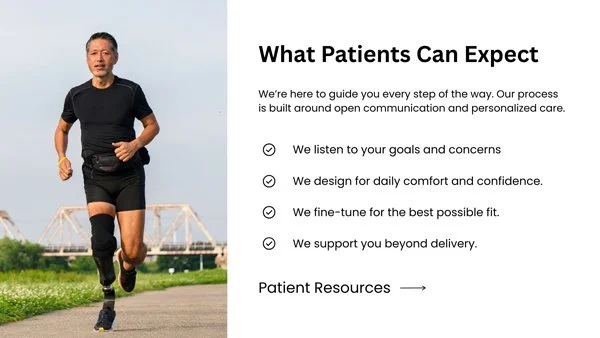
Returning to hobbies is an important part of recovery. Whether you enjoy gardening, sports, cooking, travel, fitness, outdoor activities, or time with family, your care team can help you explore ways to return to the activities that matter most.
-
Listen to Your Body
As you become more active, pay attention to comfort, fatigue, skin changes, balance, and prosthetic fit. If you notice pain, pressure, redness that does not fade, or changes in how your prosthesis feels, contact your prosthetist or care team.
-
Support for the Road Ahead
Daily life may look different, but support is available. Rehabilitation, prosthetic follow-up care, community resources, and encouragement from others can help you continue building strength, independence, and confidence.